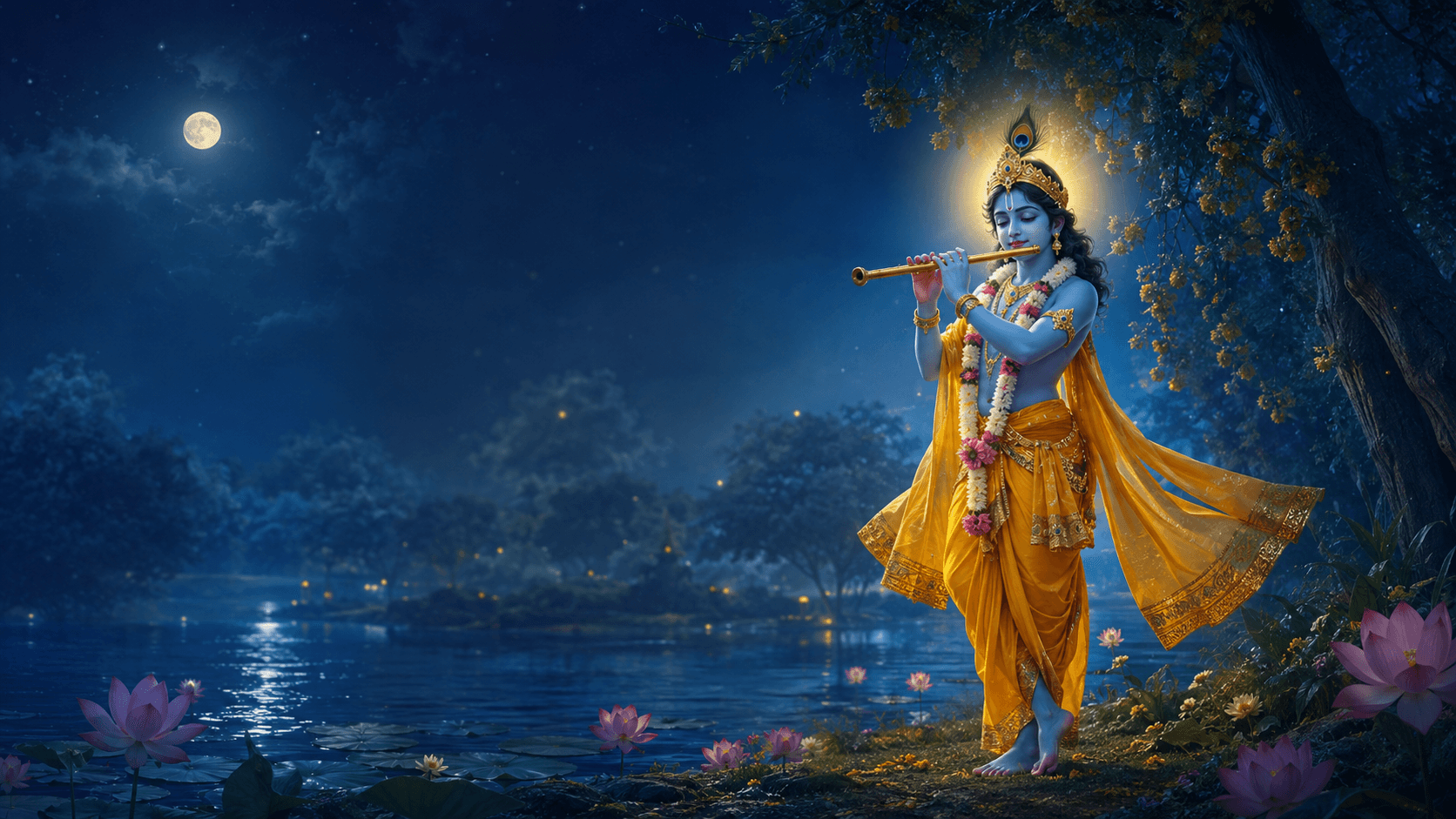
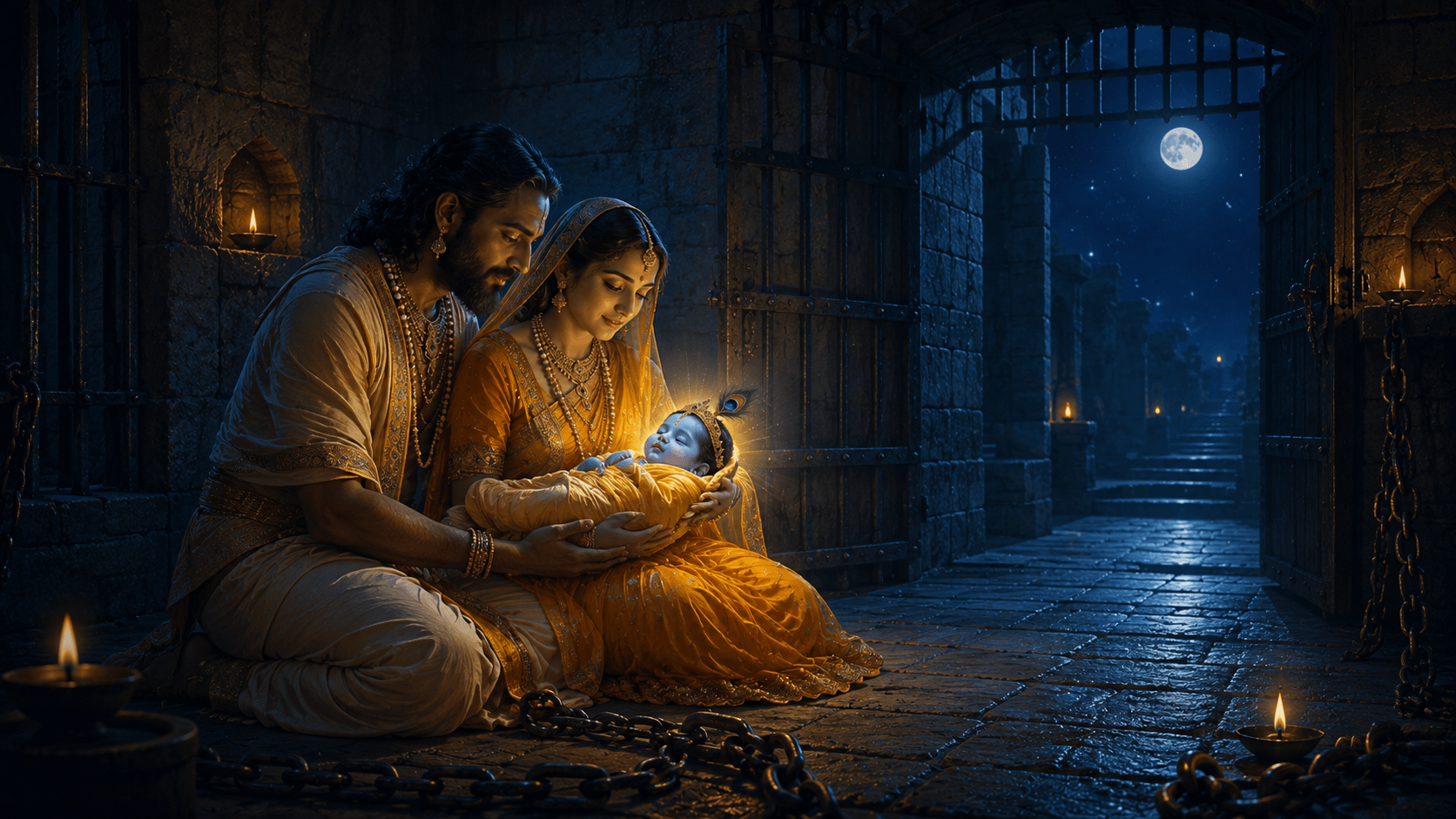
Chapter one. A dark prison chamber in Mathura opens as Krishna is born at midnight to Devaki and Vasudeva.
The Divine Birth
जन्म
Under Kamsa's oppressive rule, Krishna was born to Devaki and Vasudeva in Mathura at midnight. In the stillness of that sacred moment, chains loosened, doors opened and hope entered the world.
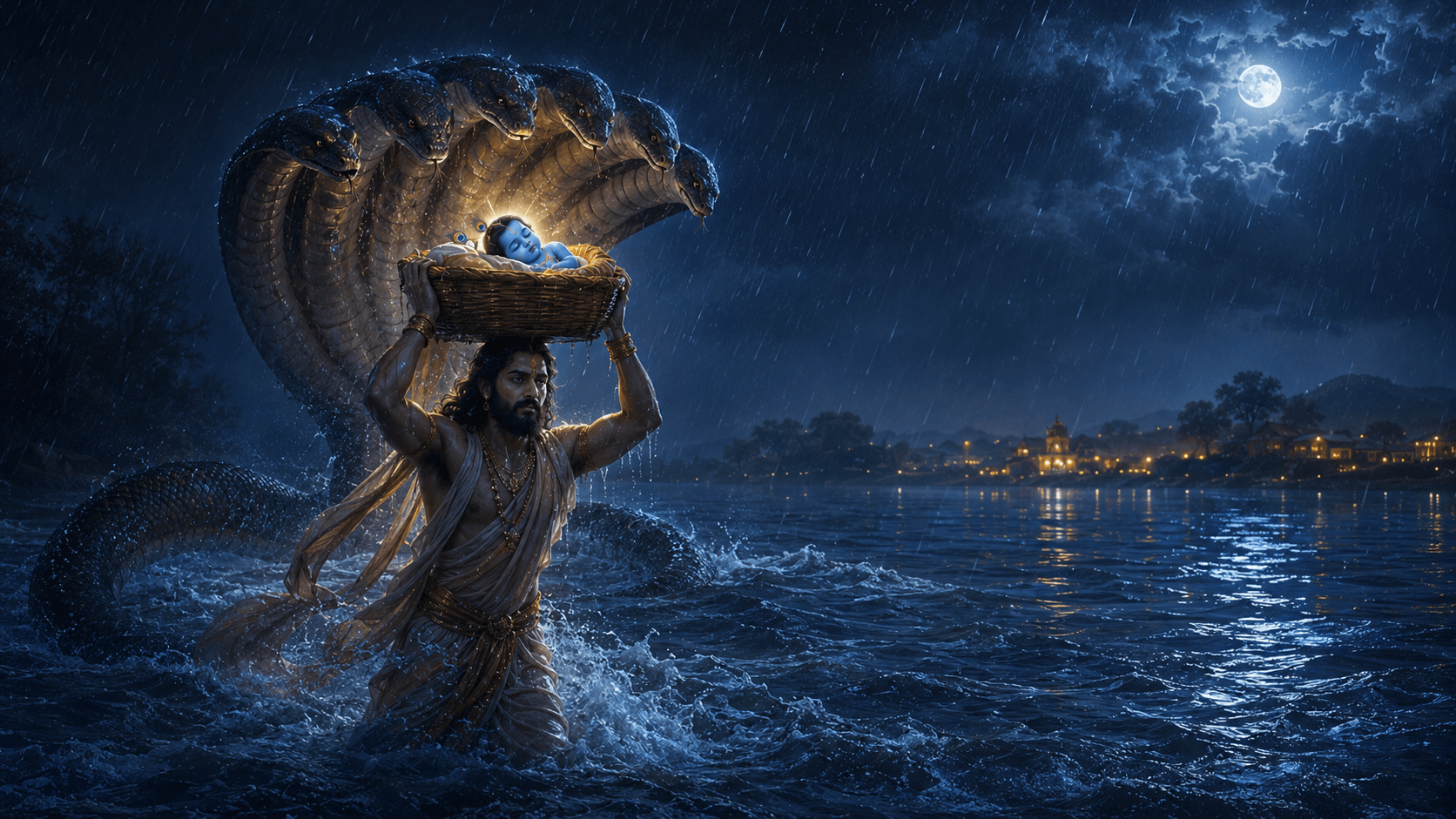
Chapter two. Vasudeva crosses the flooded Yamuna at night, carrying the infant Krishna toward Gokul while Shesha shelters them from the rain.
Across the Yamuna
Vasudeva carried the newborn Krishna through the storm toward Gokul. The Yamuna made way, and Shesha sheltered the child as the journey moved from danger toward safety.
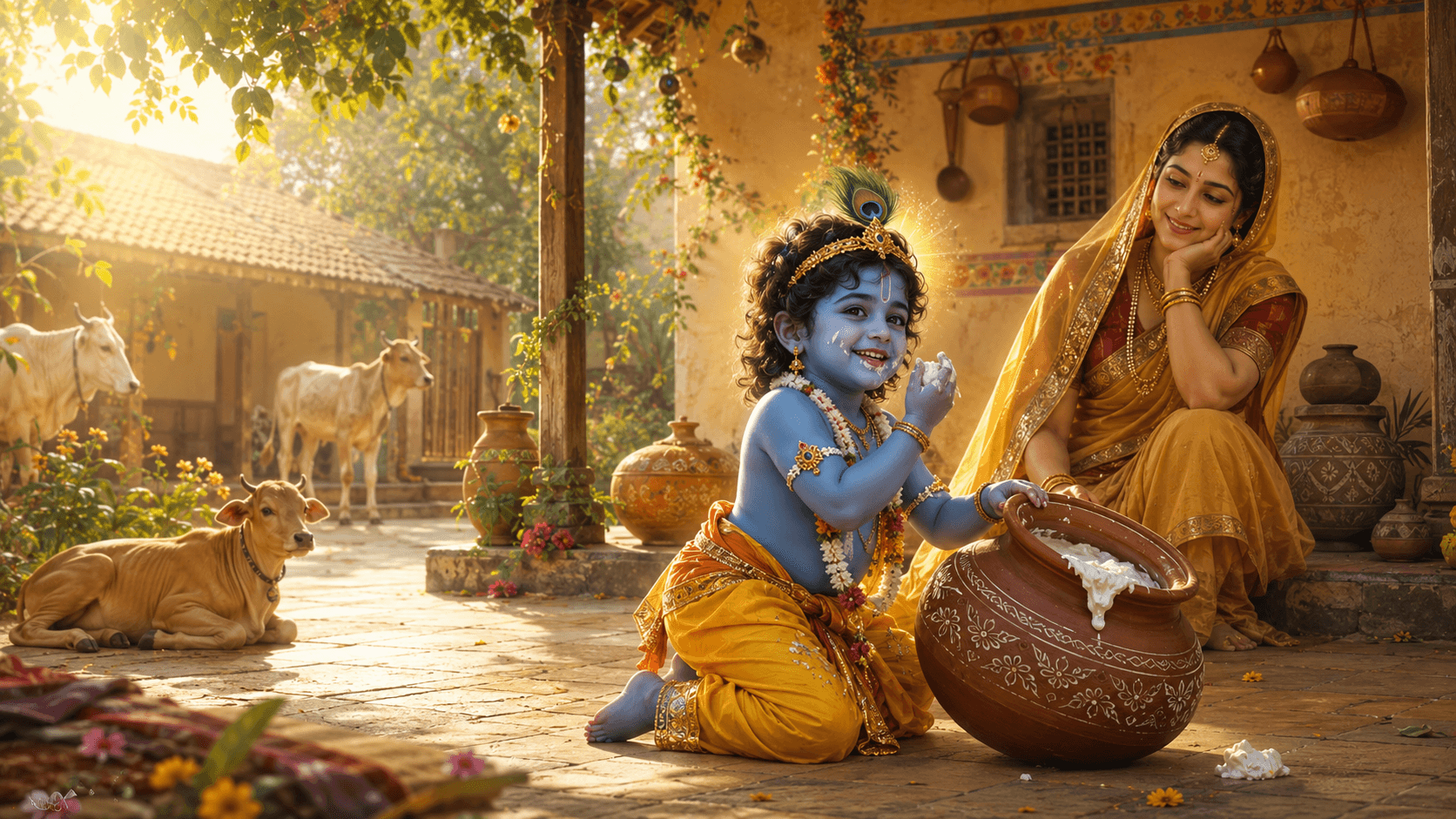
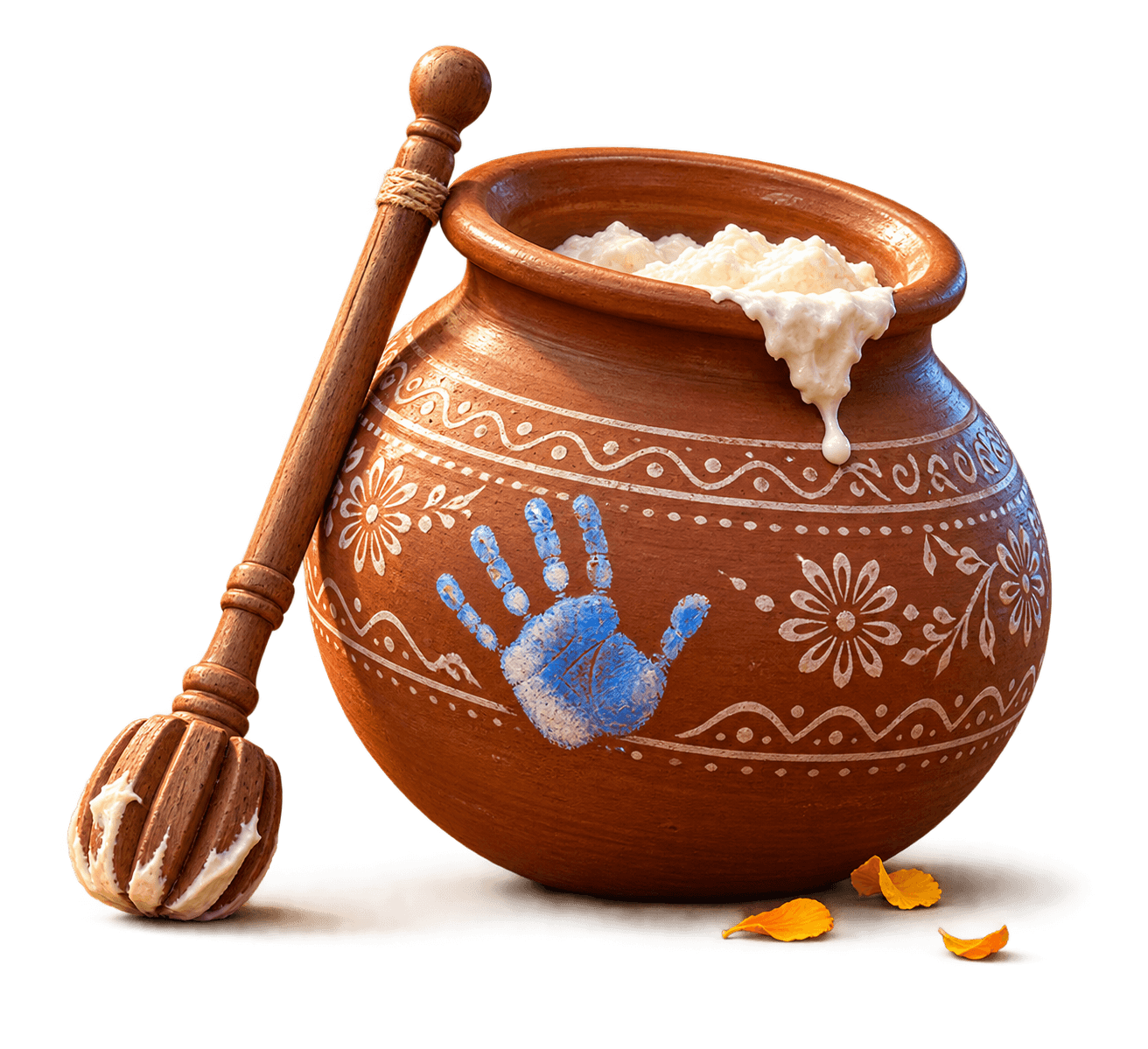
Chapter three. A warm morning courtyard in Gokul, where the child Krishna plays beside a pot of butter as Yashoda looks on.
The Joy of Gokul
Raised by Yashoda and Nanda, Krishna filled Gokul with affection, music and playful leela. Stories of butter pots and innocent mischief remember the divine through the warmth of childhood.
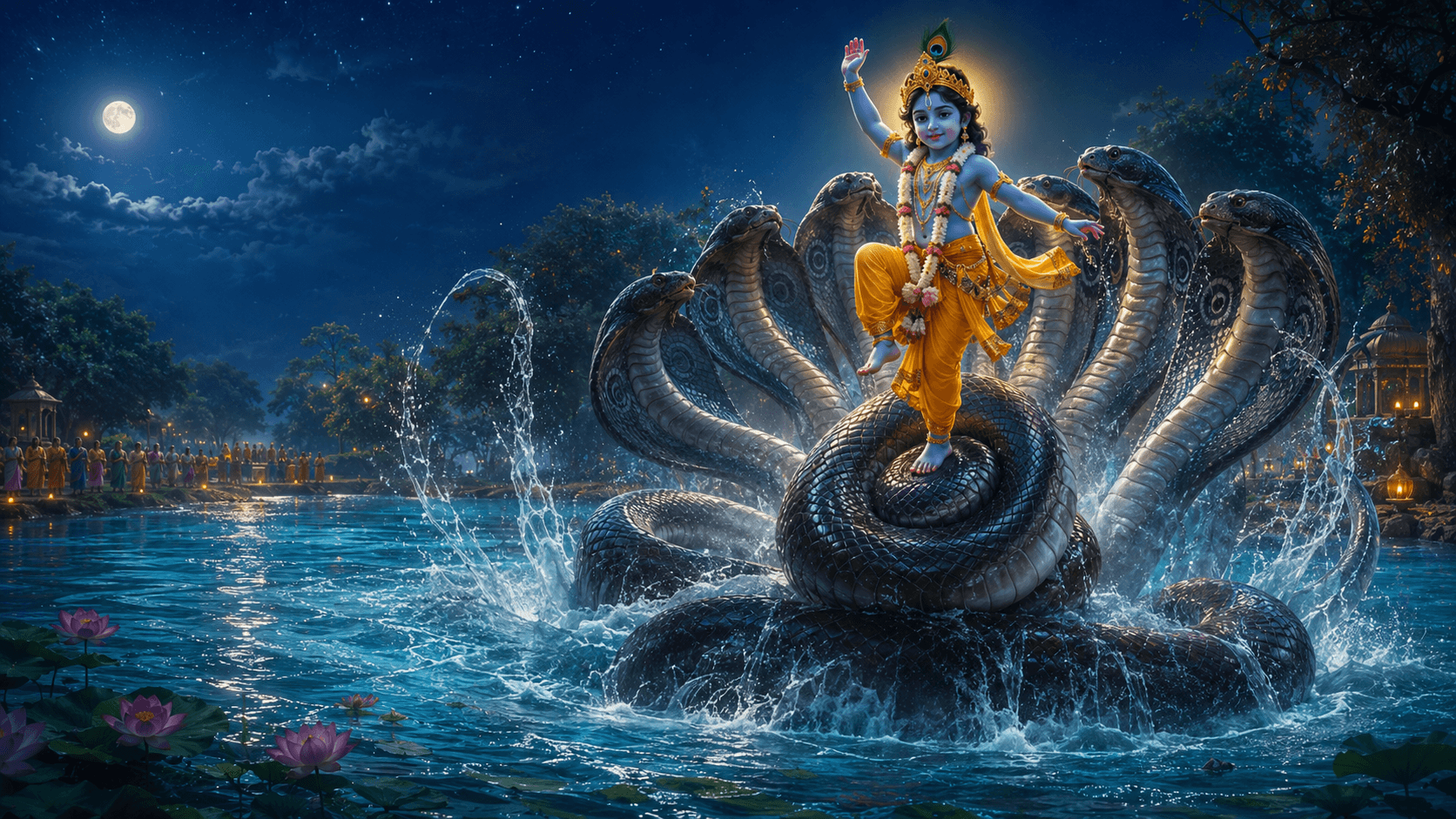
Chapter four. Krishna stands on the coils of the serpent Kaliya in the Yamuna, and the river runs clear again.
The River Restored
When Kaliya's presence troubled the Yamuna, Krishna fearlessly subdued the serpent. The story celebrates courage used not for destruction, but to restore balance and life.
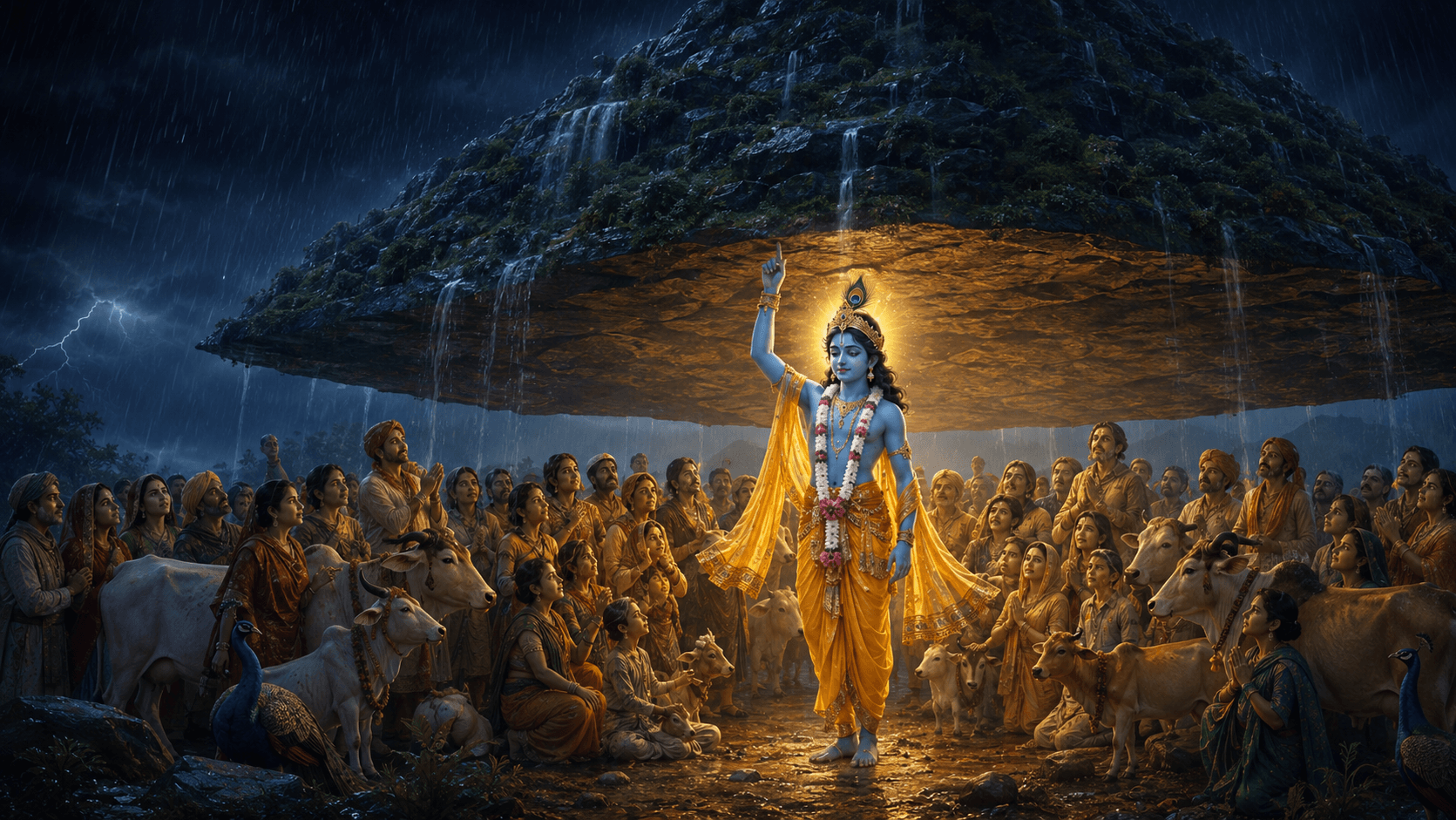
Chapter five. Krishna lifts Govardhan Hill and the people and cattle of Vraja shelter beneath it while the storm passes.
Beneath Govardhan
As a great storm threatened Vraja, Krishna lifted Govardhan Hill and gave shelter to the community. Beneath the mountain, fear became trust and protection became a shared experience.
Chapter six. A still, moonlit night in Vrindavan, where the bond of Radha and Krishna is remembered as an expression of devotion.
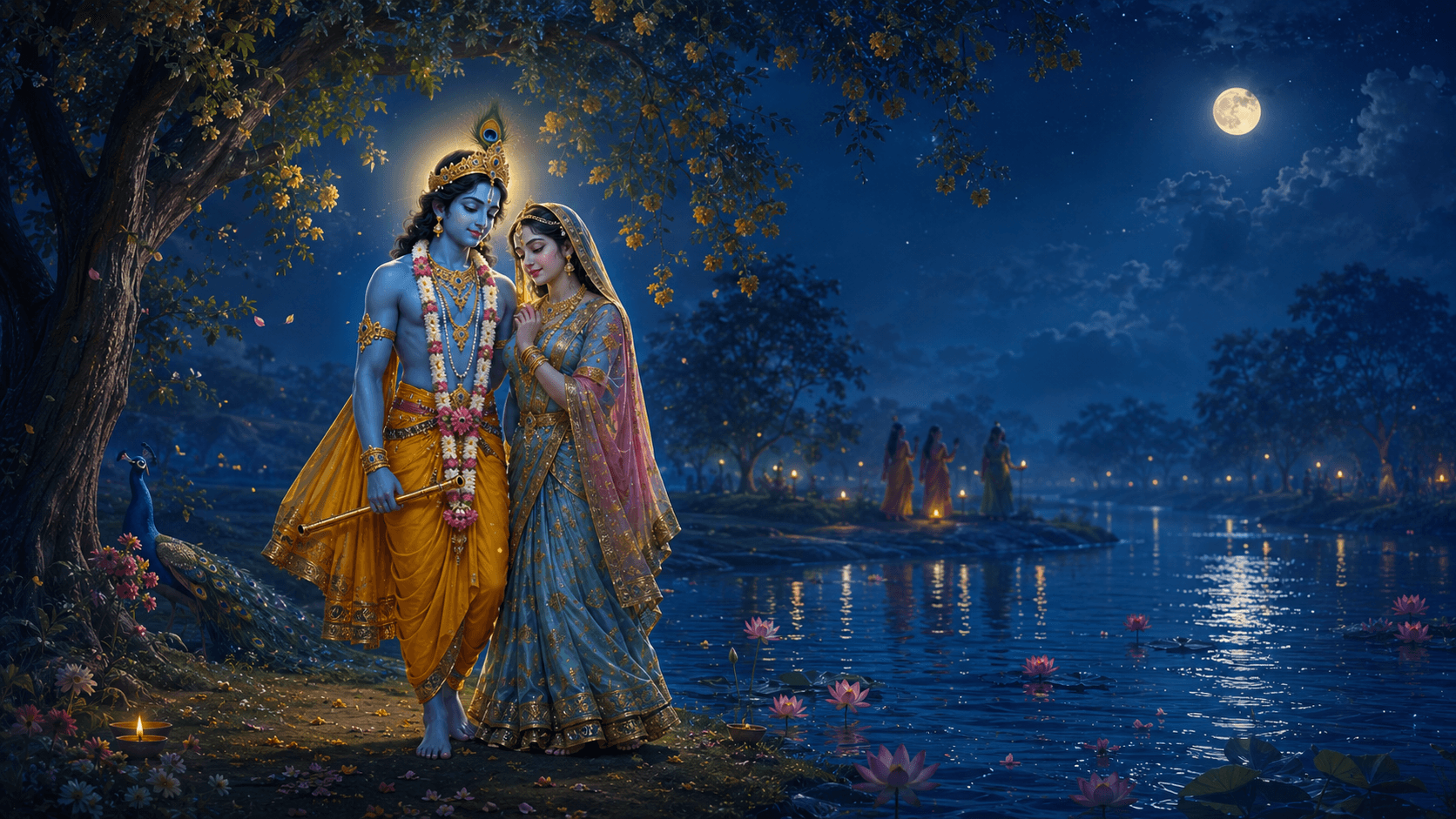
The Heart of Vrindavan
भक्ति
The bond of Radha, Krishna and Vrindavan is remembered as an expression of bhakti: a devotion that dissolves distance between the human heart and the divine.
Chapter seven. Kamsa’s throne stands empty as Krishna and Balarama walk toward an open doorway and the light of a new morning.
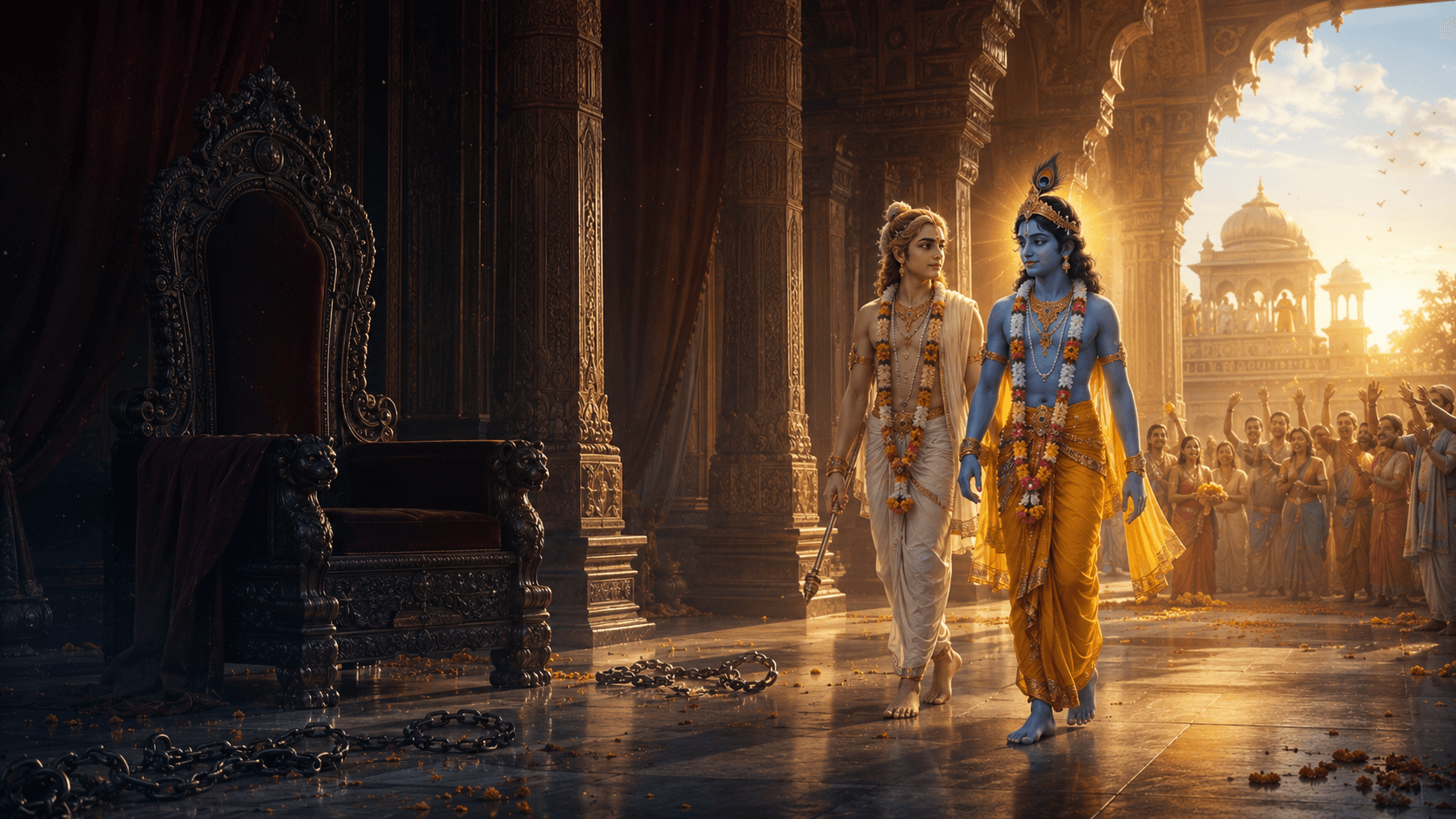
Freedom in Mathura
Krishna returned to Mathura and ended Kamsa's oppression. The moment marks a transition from playful youth toward responsibility, justice and public duty.
Chapter eight. Krishna looks out over the coastal city of Dwarka at sunrise, in a chapter about counsel, governance and service.
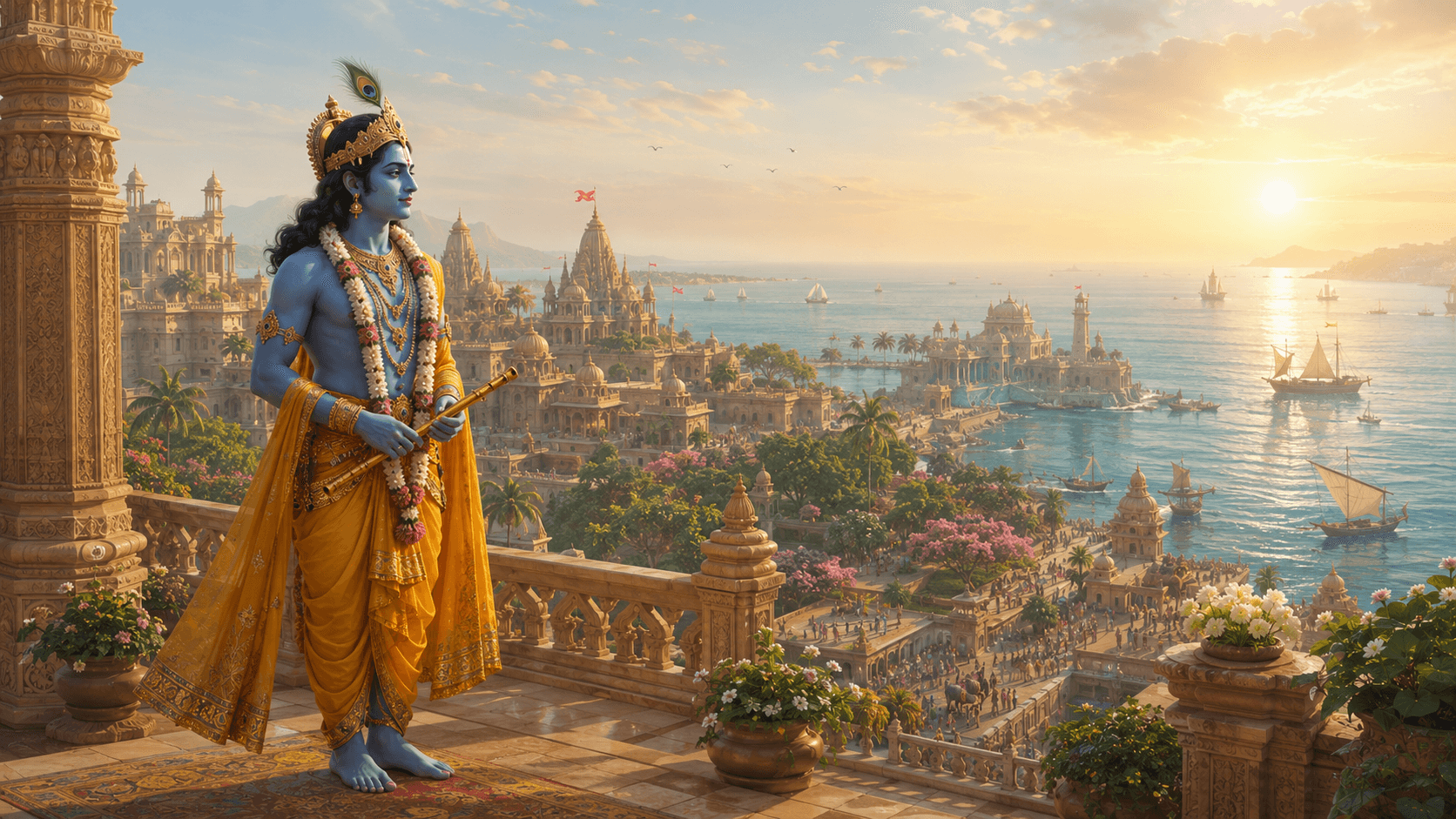
Dwarka and Leadership
In Dwarka, Krishna's story expands into diplomacy, counsel, family and governance. Strength is shown not only through action, but through foresight, restraint and service.
STRENGTH BECOMES SERVICE.
Chapter nine. At Kurukshetra, Krishna counsels Arjuna, and the pace of the story slows into reflection.
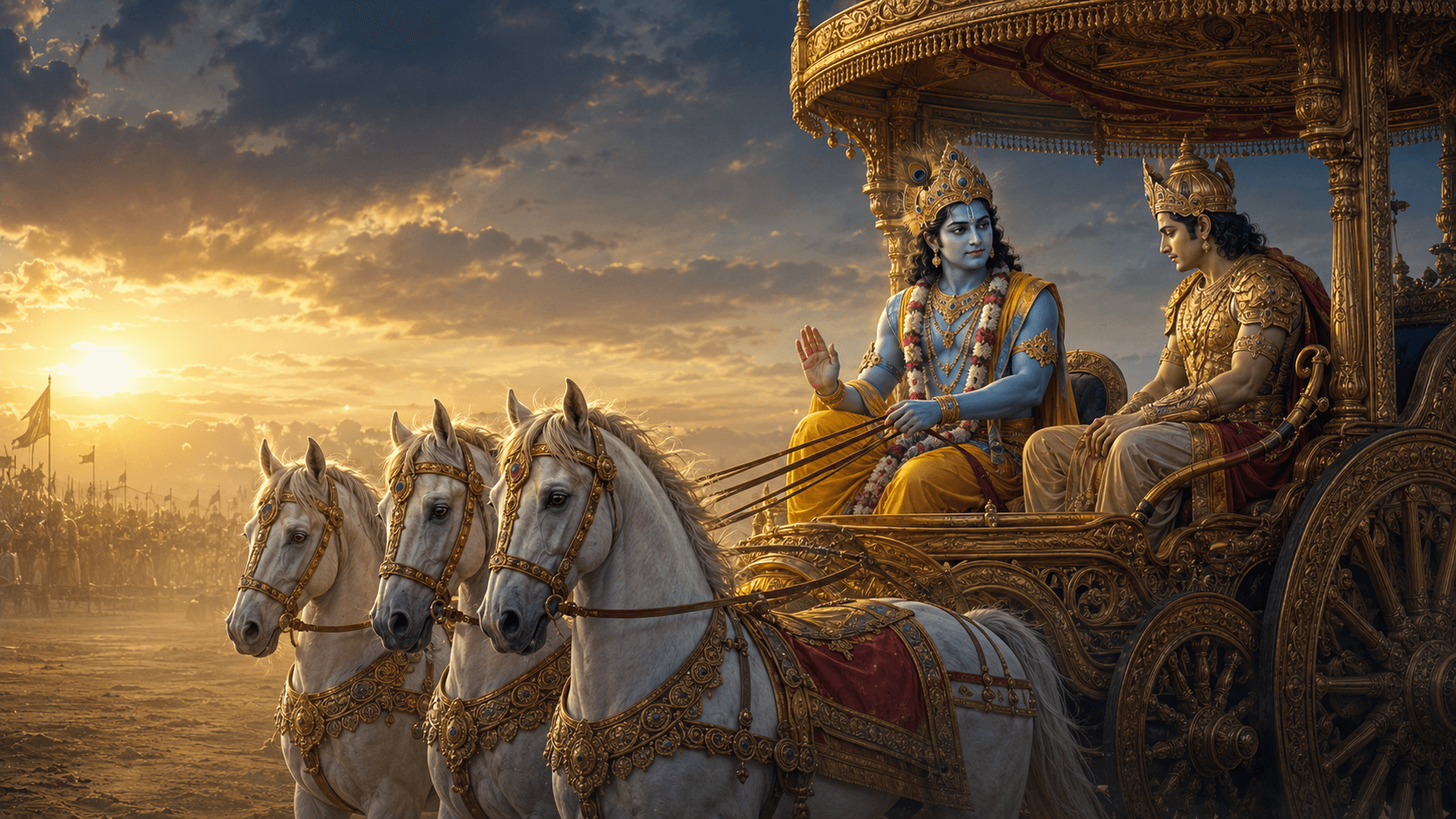
The Song of Wisdom
At Kurukshetra, Krishna guided a conflicted Arjuna through questions of duty, action, knowledge and devotion. The Bhagavad Gita continues to invite reflection on how to act with clarity without being ruled by the reward.
Act with purpose, without being ruled by the reward.
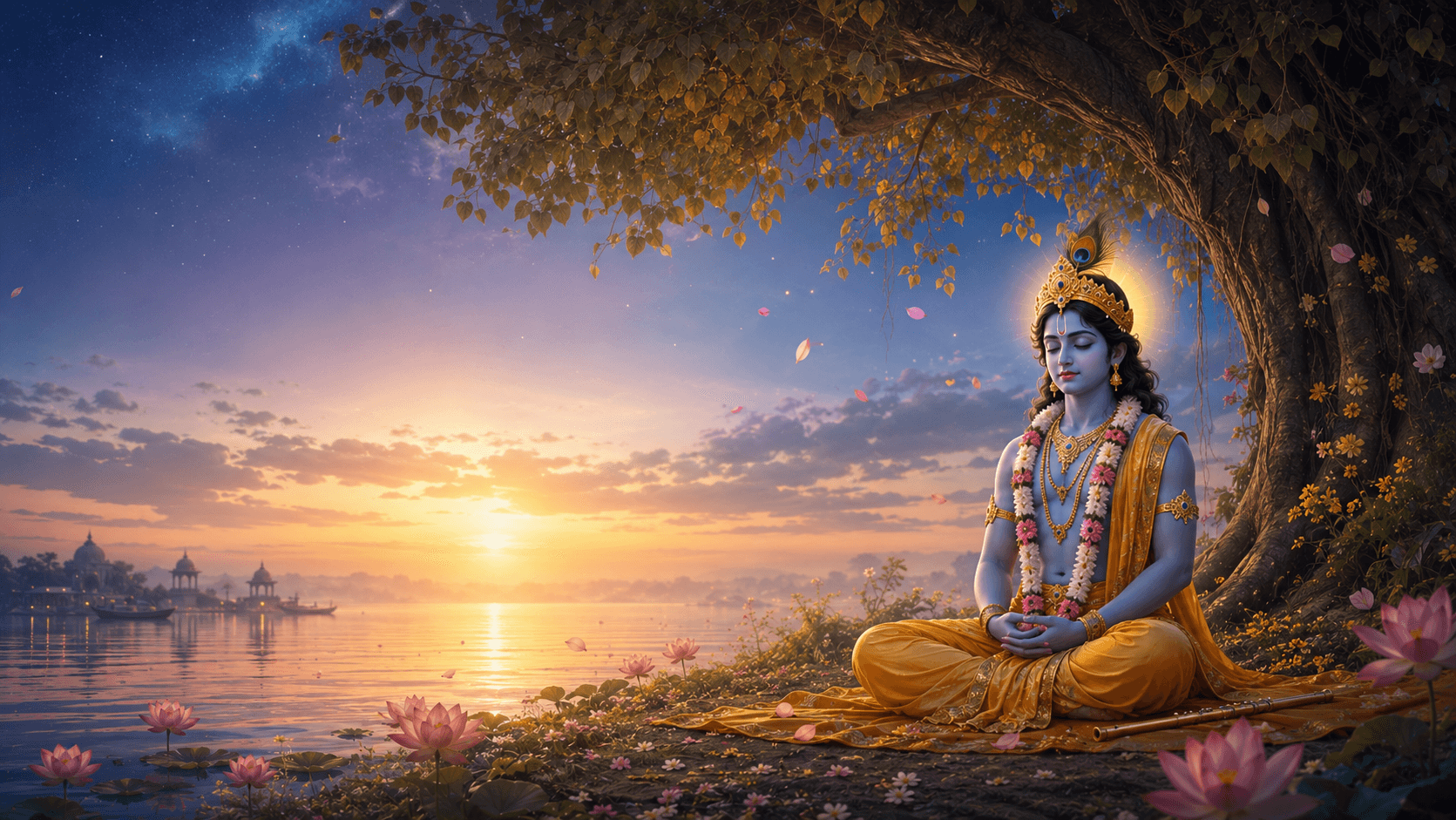
Chapter ten. Krishna sits in stillness at daybreak as the earthly journey closes and the teaching continues.
Beyond the Earthly Journey
Krishna's earthly journey comes to a close, but the teaching does not. The flute becomes silent; its meaning continues through courage, compassion, wisdom and devotion.
THE FLUTE IS QUIET. THE SONG IS NOT.
Epilogue. Janmashtami today: families light lamps at midnight around a cradle, and the story returns to the present.
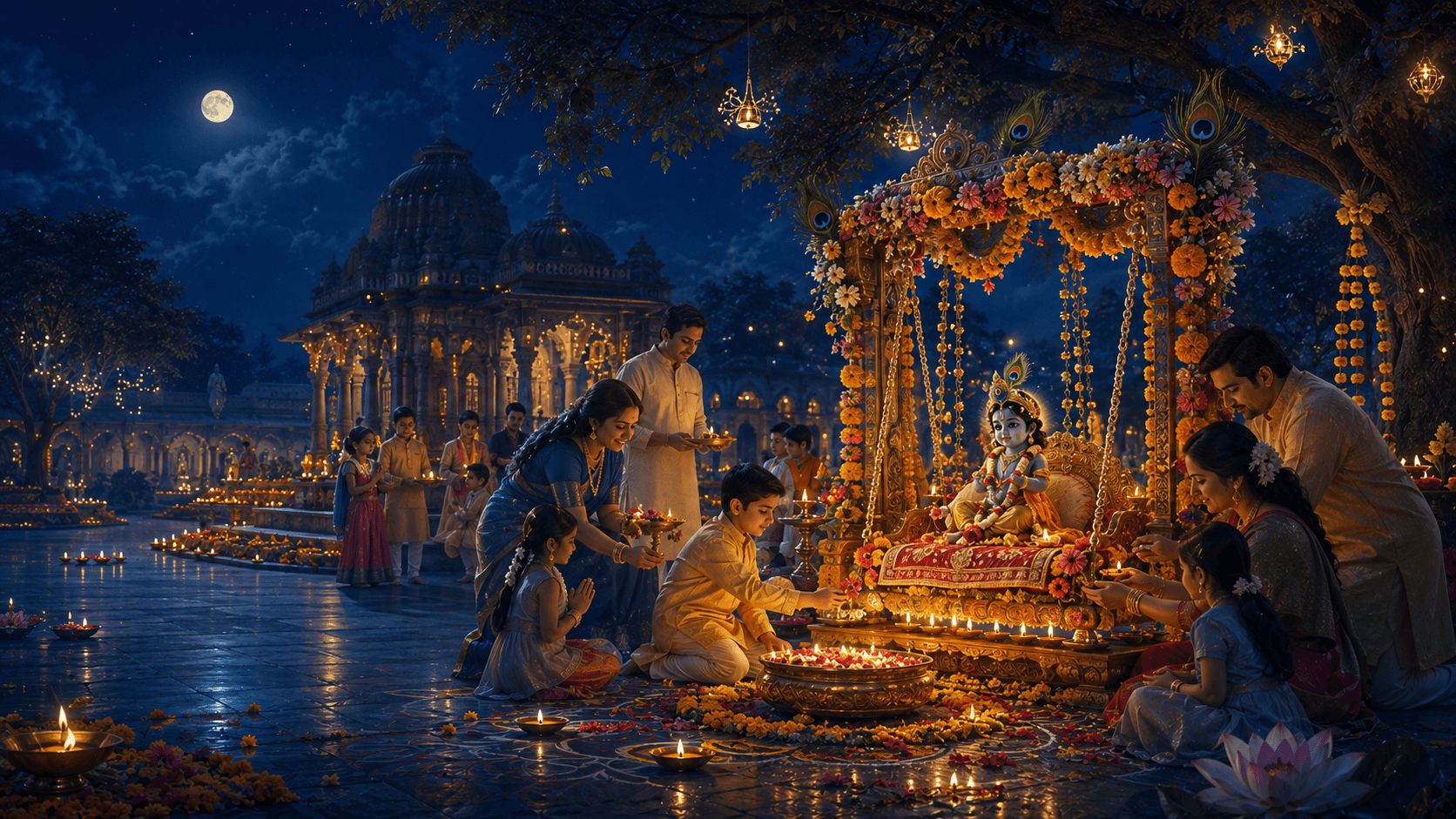
THE STORY RETURNS EVERY MIDNIGHT.
In lamps, songs and shared devotion, Janmashtami brings the journey into the present.
MAY COURAGE, JOY AND CLARITY LIVE IN EVERY HEART.
story.festival to activate this link.